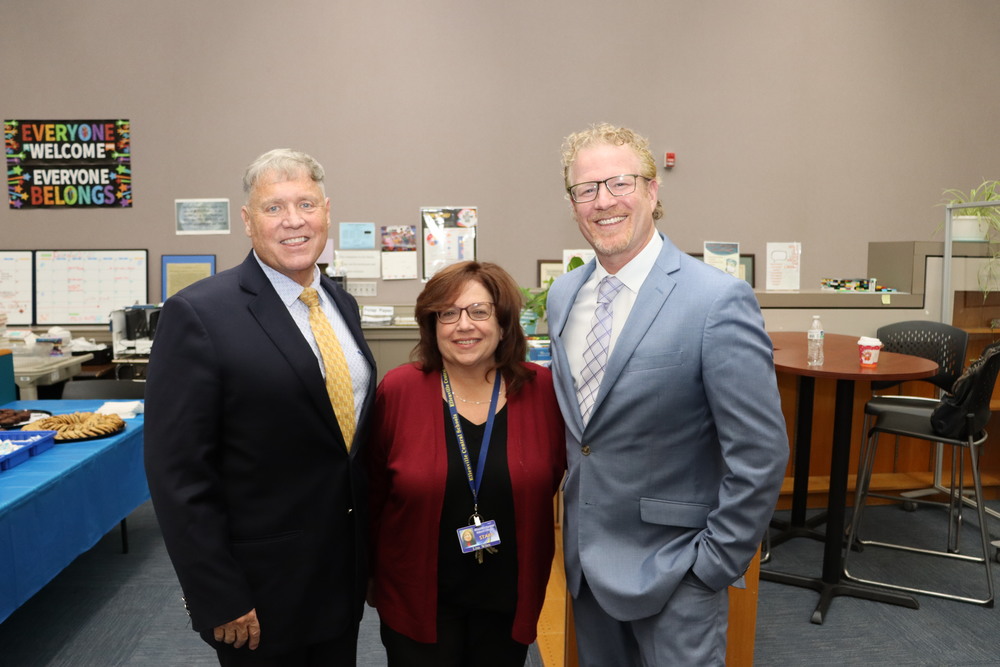
The Ellenville Central School District welcomed educational leaders and community members from around the region on November 19 for a Rural Schools Issues Forum hosted in partnership with the Rural Schools Association of New York State (RSA). The forum brought together key stakeholders to discuss the unique challenges and opportunities facing rural schools across New York State.
The forum--one of 14 taking place throughout the state--was designed to gather region-specific information that will inform legislative advocacy efforts on behalf of rural school districts.
"We were honored to host this important conversation at Ellenville," said Superintendent of Schools Lisa Wiles. "As a rural school district, we understand the unique challenges our communities face, and it's critical that our voices are heard as state education policies are developed. This forum gave us an opportunity to share our perspective and to learn from the collaborative work happening across the region."
Dave Little, Executive Director of the Rural Schools Association, opened the forum by highlighting the critical role of rural education advocacy. "It's our job to make sure we get state leaders the timely and relevant information to educate them," Little explained. "We're all in this together, and we're a lot better off when we all work together toward a common goal."
Dr. Jonah Schenker, District Superintendent of Ulster BOCES, presented an in-depth look at the state's educational transformation through the New York Inspires initiative and Portrait of a Graduate framework, which together establishes a revised vision for graduation requirements to better reflect the skills needed for modern life and career pathways. The initiative, set for full implementation in 2029, emphasizes essential competencies--including critical thinking, problem-solving, effective communication, and creative innovation--alongside academic preparation.
"Our school design doesn't always match what we know about significant learning," Schenker noted. "If we want students who are going to be leaders, problem-solvers, who have grit and take risks, we need to rethink the traditional model of schooling."
Schenker emphasized the importance of designing educational changes with rural schools in mind from the outset, rather than expecting rural districts to adapt urban-focused solutions. He shared Ulster County's collaborative approach, in which eight districts are working together on regionalization efforts to increase programming, expand career and technical education pathways, and enhance professional development.
"The one thing we can't do is do it alone," Schenker said. "We have to do it in coalition."
Following Schenker's presentation, Little returned to the podium to provide state and federal context, highlighting the alignment between educational transformation and workforce needs. "The Portrait of a Graduate addresses exactly what business has been asking for--a workforce with work ethic, communication skills, collaboration abilities, and problem-solving capacity," Little explained. "For the first time, we can give them what they've always claimed they needed."
The forum concluded with an open feedback session, where attendees shared concerns and priorities specific to their communities, including the ongoing need to support student mental health in the post-pandemic era. This input will be incorporated into a comprehensive policy brief that RSA will present to state leaders, helping ensure rural school perspectives inform future education policy and funding decisions.
"Forums like this demonstrate the strength of rural communities coming together to advocate for our students," Wiles noted. "By working collaboratively across districts and sharing our collective voice with state leaders, we're ensuring that rural schools remain at the forefront of educational innovation while meeting the unique needs of our communities. Our students deserve nothing less."